

A Collective Unconscious for Markets: The Philosophy Behind FinCatch
Every serious investor knows the feeling. You wake up to a barrage of alerts. A key supplier cuts guidance. A central bank surprises the market. A country announces export controls on a critical material. Terminals are flashing, inboxes are full, research chats are exploding.
And in the middle of all that noise, you are wrestling with a much more personal question:
What does this actually mean for the positions I care about and the theses I’ve spent months building?
Today’s AI tools make it faster to read, search and summarise. They can explain what TSMC said, or what the Fed hinted at, or how a government’s new policy is being reported. But they almost never answer the question that matters most: does this event break my thesis, where are the second-order effects I am about to miss, and what am I not asking but really need to know?
When we started building FinCatch, we realised that answering those questions required more than better summaries. It required a different way to think about how knowledge is structured and used in financial markets.
That’s where a very old idea turns out to be surprisingly useful: the collective unconscious.
From Jung to Markets: Why the Collective Unconscious Matters
In analytical psychology, Carl Jung proposed that the human mind has more than just personal memories and experiences. Beneath the individual lies a deeper layer he called the collective unconscious: a shared, universal substrate of patterns and symbols that shows up across cultures and eras. Myths, stories, crises, heroes and rebirths repeat with different faces because they are built on the same underlying structures.
There is a personal layer made of your own memories, experiences and habits. There is a collective layer made of shared patterns that shape how you think and act, often without you noticing. What you are consciously aware of at any moment is just the surface of a much deeper structure.
We are not in the business of doing therapy for investors. But we are very interested in the idea that, beneath individual decisions, there is a deeper, structured layer that nobody holds in full, yet everybody relies on.
Financial markets are exactly like that. No single analyst holds the full structure of the global market in their head. But collectively, through research, models, conversations and trades, the market behaves as if there were a shared map of relationships and meanings.
If we could externalise and maintain that map, while still preserving each investor’s private theses and preferences, we could do more than summarise events. We could show people what they didn’t ask but needed to know.
That is the philosophy behind FinCatch.
The Three Layers of a “Financial Mind”
We think of FinCatch as a three-layered financial mind: a conscious layer, a personal thesis layer and a collective market layer. Together, these layers form something like a collective unconscious for markets—a living world model that individual investors tap into through their daily workflows.
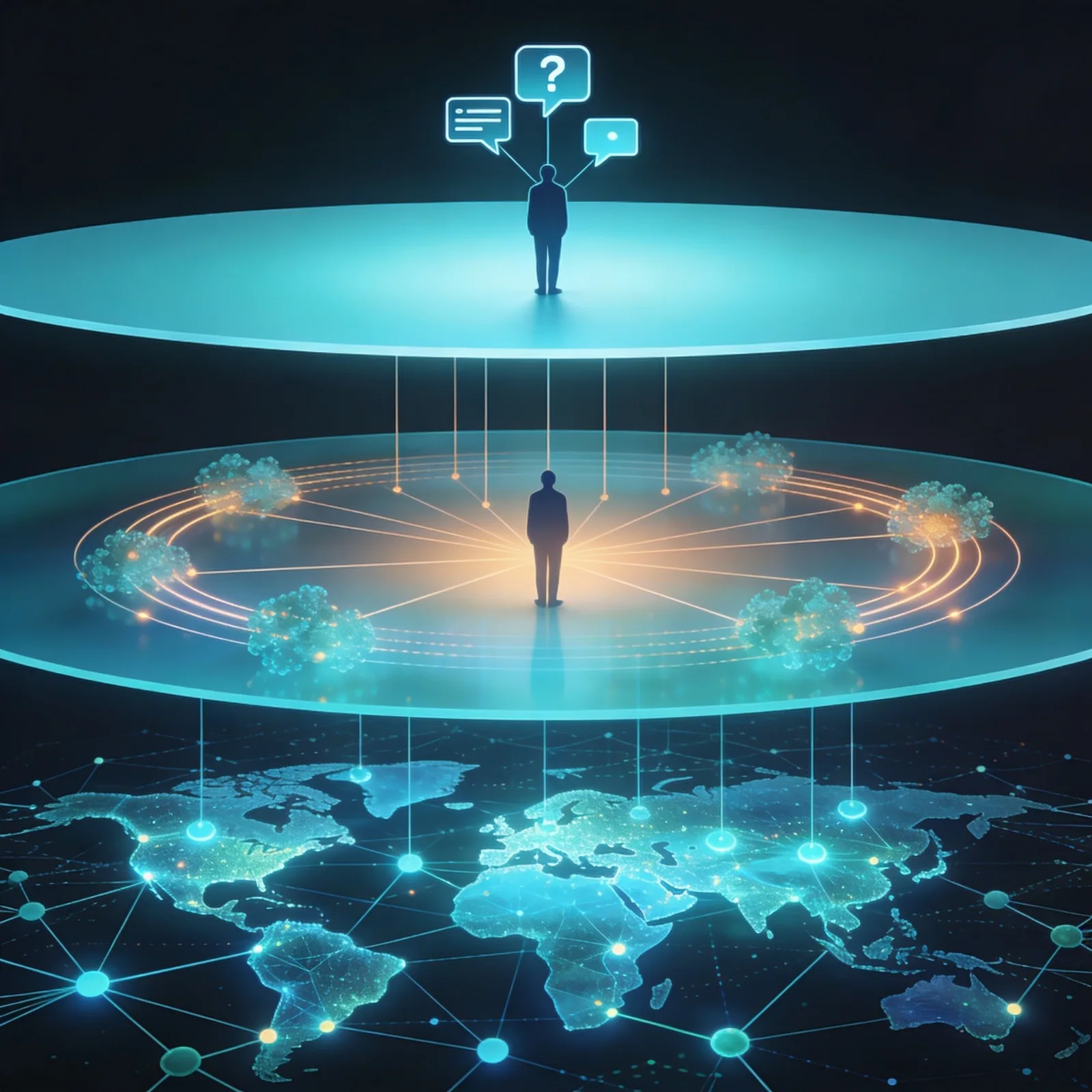
Fig 1: Three-layer model: Conscious, Personal Thesis, and Collective Market.
- The Conscious Layer: The first layer is the most familiar. It is everything you do explicitly with the system: asking questions like “What did TSMC say?”, running workflows such as post-earnings impact checks, clicking through dashboards and charts, configuring alerts and monitors. This is the conscious mind of the system, the visible interface between you and the information you want. It is where AI tools have made the most progress already: fast summarisation, semantic search, visualisation. But if the system only lives here, it is fundamentally reactive. It answers what you ask, and nothing more.
- The Personal Thesis Layer: The second layer goes deeper. Investors do not think in isolated questions; they think in theses. Over time, as you interact with the system, you reveal a great deal about how you see the world: which names you keep coming back to, which drivers you focus on, which kinds of risks you routinely ignore or over-weight, where you tend to overreact and underreact. FinCatch captures this as a personal thesis layer. It stores the theses you explicitly write or tag, tracks which entities, factors and events you routinely connect, and records how you respond to certain event types. This layer is analogous to the personal unconscious in Jung’s model: individual patterns that shape your behaviour, often before you consciously articulate them. By maintaining this personal layer, the system can surface ideas you did not ask for but that are consistent with your style, highlight blind spots based on your past behaviour and adapt alerts to your actual conviction map rather than a generic template.
- The Collective Market Layer: Beneath individual interaction and personal patterns lives the thing no human mind can store alone: a structured, shared market model. In FinCatch, this is a continuously maintained financial world model. It contains entities such as companies, funds, regulators and countries; relationships such as supply chains, factor linkages, ownership and competition; events such as earnings, guidance changes, policy moves and shocks; and temporal information about what was true when, and for how long.
Technically, we implement this as a temporal knowledge graph for finance: a graph where nodes, edges and events are time-stamped and semantically typed. Instead of treating the market as a pile of documents, we treat it as a living network of things and relationships that evolve over time.
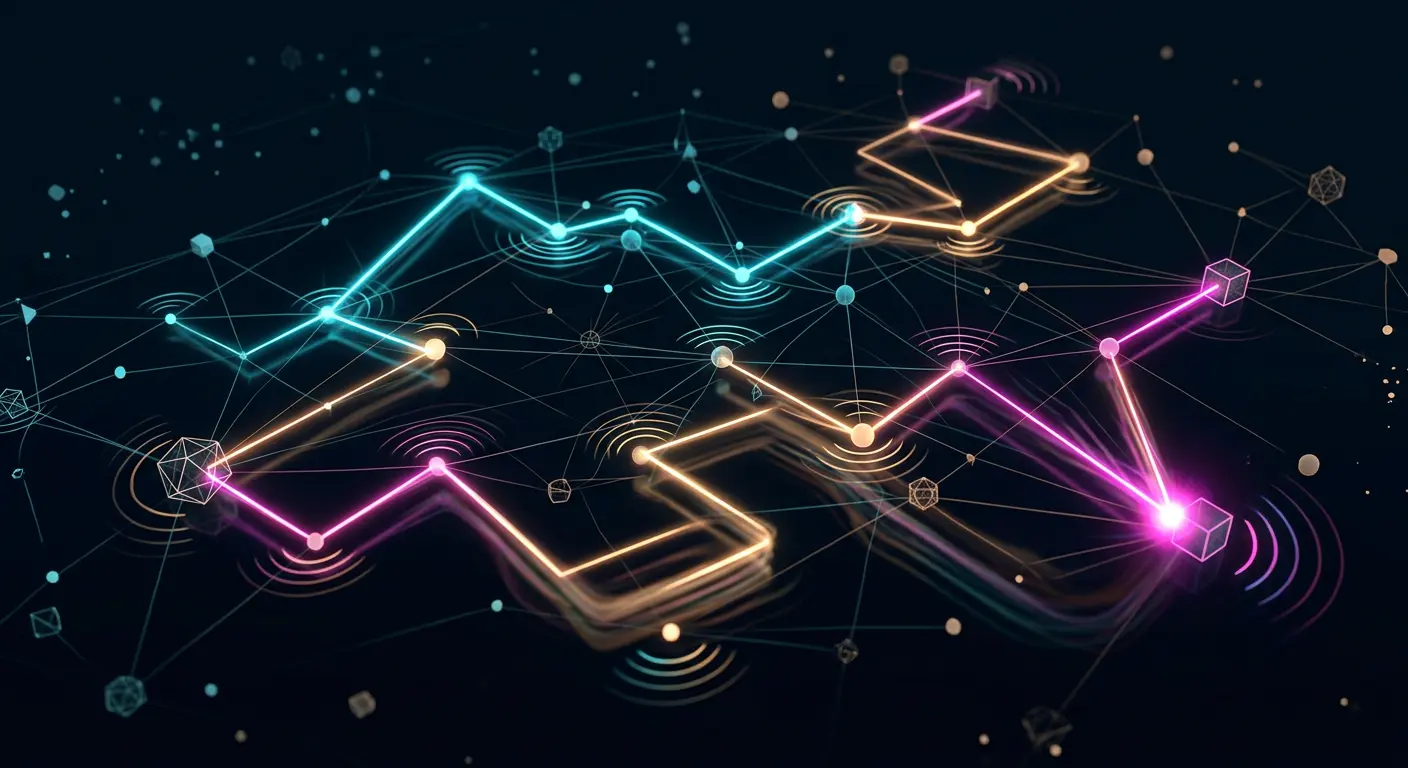
Fig 2: Network modelling for representing financial entities and relationships.
This layer is where the analogy with the collective unconscious is strongest. It is shared: every user draws from the same global market model. It is structured: not just raw text, but entities, relationships and patterns. It contains more than any individual remembers: cross-sector linkages, obscure suppliers, second-order exposures.
This layer allows FinCatch to do something a simple chatbot never can. It can trace the impact of an event from one node through multiple hops of the graph, understand that a minor supplier in one country is actually critical to a thesis two steps away, and track how narratives and numbers evolve across time and entities. When you connect this layer to your personal thesis layer and conscious questions, you get a very different kind of system.
How the Layers Work Together: A Concrete Example
Consider that 6 AM TSMC scenario.
You type “What did TSMC say?” or open your post-earnings workflow for TSMC. The system pulls the earnings release, call transcript and relevant news, and summarises the key changes in guidance, capex and commentary. So far, this looks similar to other AI tools.
But FinCatch also knows, from your own theses and history, that you hold NVDA and ASML, that you track an analog supplier relying on TSMC’s advanced nodes, and that in past events you have reacted strongly to capex changes but often underreacted to shifts in lead times. It identifies which of your active theses depend on TSMC capex, node mix or fab utilisation, and which positions are sized based on those assumptions.
At the same time, the knowledge graph contributes information about which companies are directly and indirectly linked to TSMC’s updated guidance, which historical patterns show how similar guidance changes propagated through the ecosystem, and which macro factors might modulate the impact.
Now the system can say much more than “here is what TSMC said”. It can tell you which theses in your book rely on assumptions TSMC has just updated, highlight second-order exposures you have not explicitly tagged but that are linked via the supply chain, and remind you that, based on your own history, you typically underreact to this kind of change.
You only asked “What did TSMC say?” but the system can now tell you what that means, where it hits your conviction, and what you are likely to miss.
That is what we mean by building a collective unconscious for markets: your conscious question is only the entry point into a much deeper, structured understanding.
Why This Philosophy Matters for Investors
All of this philosophy has very practical consequences for professionals who live and die by their theses.
- It reduces blind spots: Most risk does not come from what you are already watching closely. It comes from the second-order exposure you forgot about, the small supplier that turns out to be critical, or the assumption that quietly expired while you were focused elsewhere. By combining your personal thesis layer with the collective market model, the system can systematically surface assumptions you have not revisited, inputs that have changed even though the company itself has not reported, and events that are structurally similar to ones that hurt you in the past. These are exactly the patterns human memory is bad at and machines can be very good at, as long as the structure exists.
- It makes agents less fragile: Stateless AI agents are fragile: they forget what happened yesterday, rely entirely on the current prompt and treat each question as a fresh start. With a world model and personal thesis layer, agents no longer depend solely on what is in the current context window. They can pull from a persistent, structured view of both the user and the market, and workflows become maintained rather than one-off. The intelligence of the system moves from the prompt into the underlying memory and structure.
- It creates a compounding data asset: Every time the market produces a new event, a user tags a relationship, or a thesis is updated in response to a shock, the world model and the personal layers become richer. Over time, this builds a history of what changed, a record of how different portfolios responded, and a map of which relationships actually mattered versus which were noise. That is not just useful for one analyst. It is the foundation of an operating system for how capital allocators update views and simulate decisions before moving capital.
Seeing More Than You Ask
At the end of the day, our goal is simple. When a market event happens, you should know which of your theses might be broken, where second-order effects hide, and what you need to revisit, without manually re-deriving the entire chain every time.
To do that reliably, you need more than good summaries. You need a living, shared model of the market, a persistent record of your own convictions, and a system that can connect the two in real time.
That is why we reached for the language of the collective unconscious. Not because we are trying to import psychology into finance for its own sake, but because it captures the core idea: there is more structure underneath your decisions than you can consciously hold at once. Our job is to make that structure visible, navigable and actionable, so you always see not just what you asked, but what you actually need to know.