


How FinCatch Remembers What You Think About the Market
Most AI assistants forget everything the moment you close the chat. FinCatch doesn't, and here's how we built a memory system that actually understands you as an investor.
Most AI tools live at the surface: they see the news, the filings, the analyst notes, and then generate answers as if every investor should react to those events in the same way. Underneath FinCatch, there is a shared layer running all the time — a financial world model built as an event‑centric graph of what's happening to companies and how those events connect. Between that market "collective unconscious" and the visible chat sits your own personal layer: a separate graph that remembers which parts of the story you noticed, how you interpreted them, and how your conviction shifted over months of research. The three layers stay distinct and safely separated, but they constantly talk to each other, so the system can reason not just about what changed in the market, but about what that change means given the way you already see the world.
The Problem With AI Memory Today
Ask a typical AI assistant "what do I think about Nvidia right now?" and it will either say it doesn't know, or hallucinate a confident answer. That's because most AI tools treat every conversation as a fresh start. They have no memory of what you said yesterday, last week, or six months ago when you were working through an investment thesis. For a general-purpose chatbot, that's tolerable. For a financial assistant, it's a dealbreaker.
Every conversation starts cold — no trace of what came before.
If you've been tracking Nvidia since the January earnings call, turned cautious after a March pullback, and have been watching the data center capex story for half a year ... your AI should know all of that without you re-explaining it every time. And when you ask about Nvidia's competitors, or what your overall semiconductor exposure looks like, it should be able to reason across all of it.
Building that kind of memory is the core engineering challenge we tried to solve.
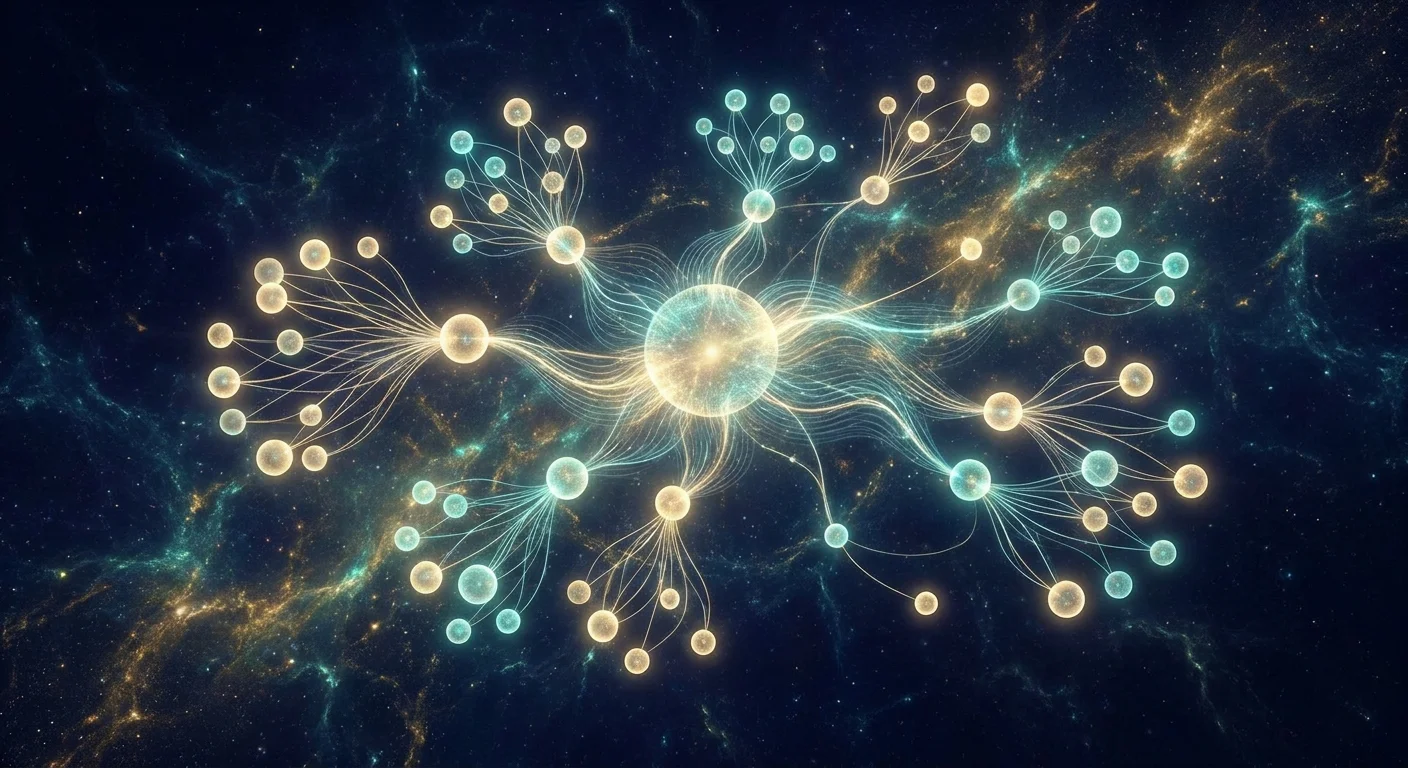
Memory as a living graph — entities connected by relationships, not scattered text.
What Good Memory Actually Requires
Before describing how we built it, it helps to understand the three things that make financial memory genuinely hard.
It has to understand finance, not just words. A general-purpose memory system might remember that you mentioned "NVDA" a lot. A financial memory system needs to understand that NVDA is a ticker, that you expressed a bullish view on it, that it's in the semiconductor sector, and that AMD competes with it. The difference matters when you ask questions that span companies, sectors, or themes.
It has to be affordable to run at scale. The most obvious way to give an AI memory is to feed it your entire chat history on every query. This works for a few hundred messages. With thousands of users each having hundreds of conversations, that approach would cost a fortune. A real memory system has to distill history into something compact and reusable.
It has to retrieve the right things at the right time. When you ask about semiconductors, you don't want every message where you ever said "chip." You want your actual views on relevant companies, weighted by how recently and confidently you expressed them, connected to related themes. That's a retrieval problem, not just a storage problem.
How Other AI Tools Handle Memory, why can't we just replicate what they do
To understand why we built something custom, it helps to see what the leading AI products actually do today.
ChatGPT's web and mobile apps store two kinds of memory: a list of facts you've explicitly told it to remember, and a background system that scans your conversation history for patterns. You can view and edit the explicit memories in Settings. This works for general preferences ("I prefer concise answers", "I live in New York"), but the underlying representation is unstructured free text. There is no explicit schema for entities, relationships, or time, so information is stored as disconnected snippets rather than a coherent model.
This has concrete limitations for systematic reasoning. The system can retrieve relevant past details heuristically, but it cannot reason compositionally over them. For example, it does not explicitly represent that "Nvidia" is part of the "semiconductor sector" or track how your stance on each evolves over time. There is also no versioning: updates, reversals, and temporal context are not reliably preserved as first-class objects. While ChatGPT's apps can now reference your entire conversation history retroactively, this background insight layer is not directly inspectable or editable the way saved memories are.
Claude's apps take a different approach: they automatically synthesize a running memory summary from your chat history, updated approximately every 24 hours. This produces a more continuous sense of context across sessions, but the representation is still compressed natural language—a summary paragraph rather than a structured knowledge base. The tradeoff is stronger abstraction but greater information loss: details are merged, overwritten, or dropped, and there is still no explicit structure for entities, relationships, or temporal evolution.
Neither app maintains an explicit graph of how concepts relate, versions beliefs over time, or supports compositional queries over memory, which matter when tracking evolving positions across dozens of research sessions or financial contexts.
| ChatGPT Memory | Claude Memory | FinCatch Memory | |
|---|---|---|---|
| What's stored | Free-text snippets + conversation summaries | Free-text synthesis paragraphs | Structured entity graph (nodes + edges) |
| Finance-specific schema | None | None | Tickers, sectors, industries, taxonomy |
| Tracks how views evolve | No versioning | No versioning | Yes |
| Reasons across relationships | No explicit relations | No explicit relations | Yes |
| Sentiment tracking | Generic inference | Generic inference | Yes |
| Temporal queries | Chronological chat retrieval only | Summarized, not queryable | Yes |
| Scales with conversation volume | Limited by context window, old context compressed/dropped | Limited by context window + synthesis loss | Unbounded graph storage; structured retrieval fits dense context into same window |
The gap isn't about which AI model is smarter. It's about the design underneath. A list of text snippets can't answer properly "what's my overall exposure to the semiconductor sector and how has my thinking evolved?".
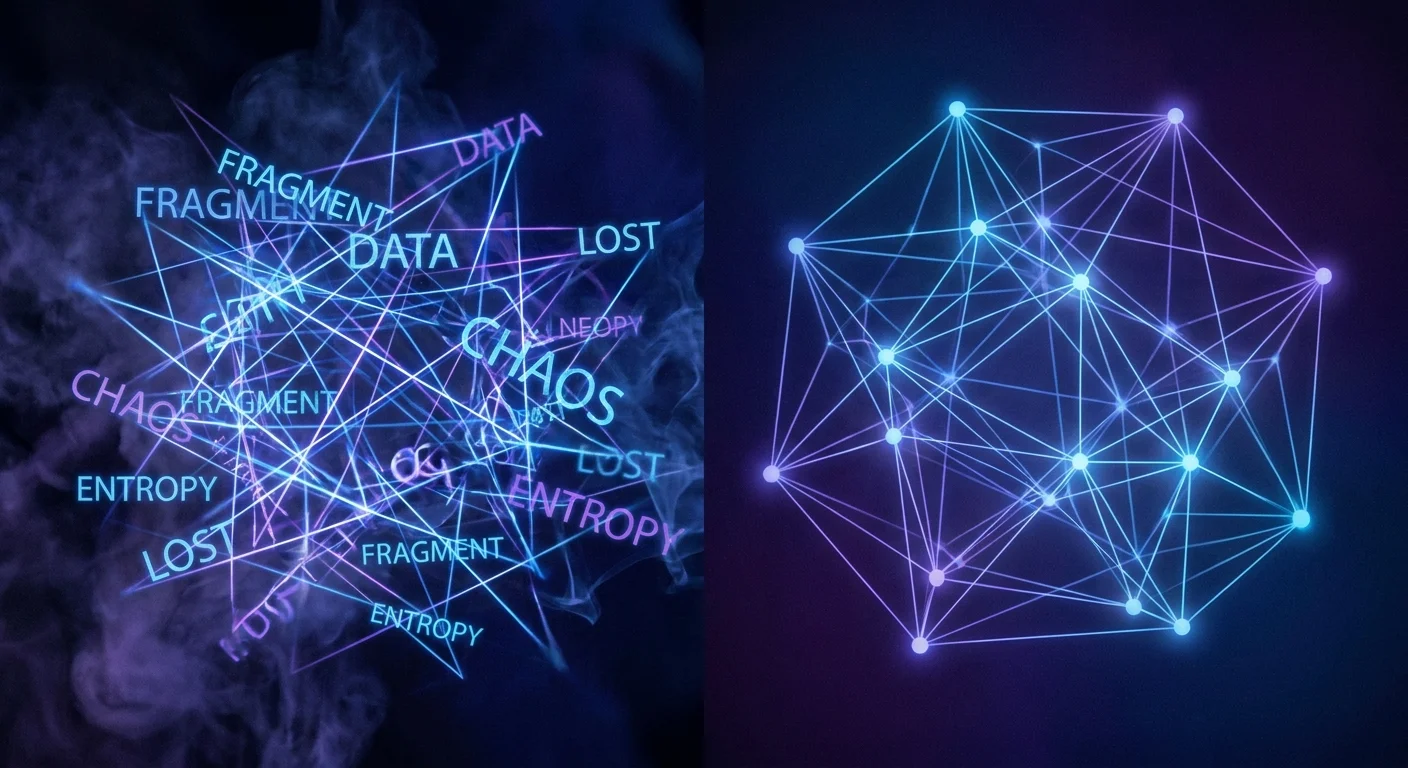
Unstructured text snippets vs. a structured knowledge graph — the difference in what you can reason over.
The Design: Structured, Smart, and Built for Finance
Memory as a Knowledge Graph, Not a Chat Log
The central design decision is storing knowledge as a graph rather than as raw text.
When you ask "what do I think about the semiconductor sector?", the system doesn't search through chat logs — it navigates the graph. It finds the semiconductor sector, follows edges to the companies in that sector, and surfaces your stored views on each one. That kind of structured reasoning is impossible with a plain text archive.
The graph also tracks how your views change over time. This is handled through a two-layer design: a live memory and a snapshot history.
The live memory is your current view on an entity: a concise, up-to-date summary of what you think about Nvidia today, your sentiment, and why. Every time you say something new about Nvidia, the live memory gets updated to reflect it.
But the old view isn't thrown away. Before updating, the system preserves a snapshot of what the memory looked like before. Over time, this builds a complete timeline of how your thinking evolved: when you turned bullish, when you got cautious, what changed. You're not just left with where you ended up, and can trace the whole journey.
Two Graphs, Two Purposes
It's worth noting that FinCatch actually runs two separate knowledge graphs, and they serve very different purposes.
The memory graph described in this post stores your world: your views on companies, your sentiment, your history as an investor. It's personal and subjective.
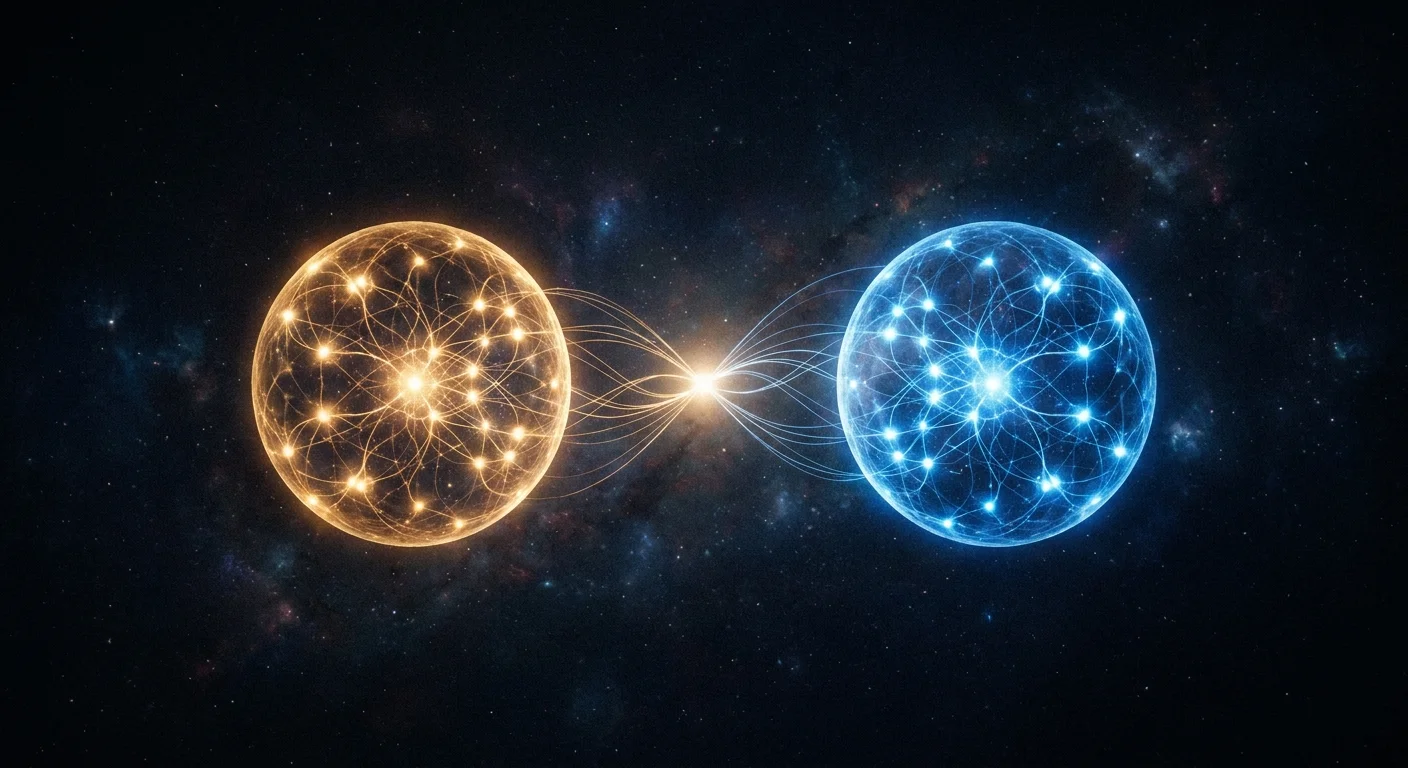
Two graphs, two worlds: your personal memory graph and the shared market knowledge graph, connected at query time.
The second graph — covered in depth in From Facts to Foresight: Rethinking the Knowledge Graph for Financial Markets, stores the market's world: objective facts about companies, events from earnings calls and news, analyst signals, and how those events chain together into narratives over time. It's shared across all users and updated continuously from public sources.
When you ask FinCatch a question, both graphs can contribute to the answer. The market graph provides what's objectively true about a company. The memory graph provides what you think about it. Together they make the assistant genuinely useful for financial reasoning.
That's also why FinCatch's memory behaves differently from most LLMs and AI agents. They remember in a very human‑conscious way: a bit of chat history, a few saved facts, maybe a summarized "impression" of who you are. We keep that visible layer too, but treat it as just the top of a deeper stack: beneath the dialogue, the market graph tracks objective events, and in between sits your personal graph, quietly modeling your evolving views, sentiment, and connections between ideas. When a new earnings call, guidance change, or rating move hits the market graph, the system can immediately see which of your existing theses it supports, which ones it conflicts with, and where it might be worth nudging you to revisit your assumptions. Memory stops being a convenience feature and becomes an engine for systematically challenging and sharpening how you invest.
The result isn't just a nicer chat experience — it's an assistant that can spot when your views and the market are drifting apart, surface the right events at the right moment, and nudge you toward the next question or task that is most likely to improve your edge.
What's Next
The graph grows with you. Every conversation adds to it, refines it, and makes the picture of your thinking more complete. From here, we're focused on putting that graph to work in more places:
The graph grows with every conversation — rooted in your history, branching toward deeper insight.
Smarter, proactive context. Right now, memory is retrieved when you ask something. The next step is surfacing it when it's relevant even if you didn't ask, noticing that a company you've been tracking just reported earnings, or that a thesis you wrote three months ago now has new data worth revisiting.
Across-portfolio reasoning. As the graph accumulates views across many companies and sectors, we can start answering questions that require reasoning across your whole portfolio of opinions: where are you most concentrated, where are your views most in tension, what assumptions are you implicitly making across positions.
Personalized research pathways. The market knowledge graph and your memory graph together create something genuinely novel: an AI that knows both what's happening in the market and how you specifically think about it. We'll be building research workflows that use both to generate insights tailored to your actual investment style, not a generic user's.